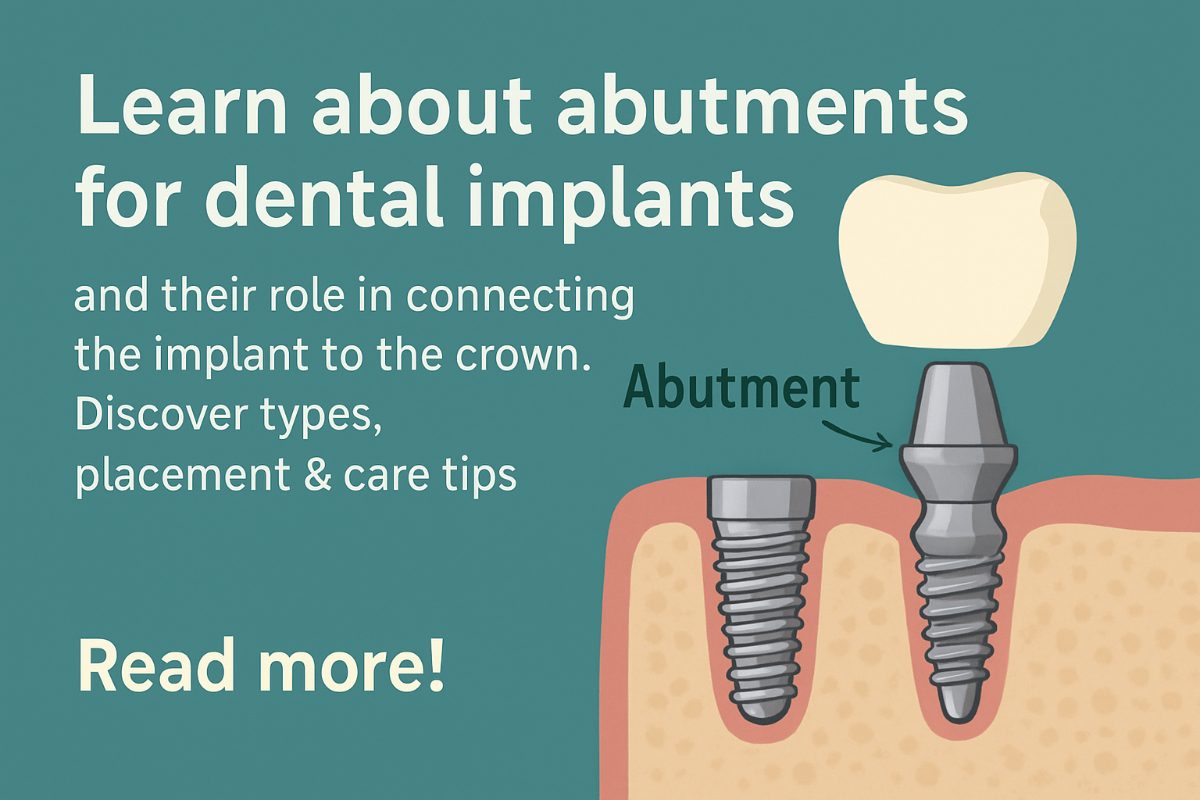
Abutments for dental implants connect the implanted metal root to the visible tooth replacement. This post explains what an abutment is, the parts of an implant restoration, the types and materials of abutments, how choice affects look and function, the typical placement process, common care issues, cost basics, and when to talk with a dentist about options.
What is an abutment?
An abutment is a small connector that screws or bonds onto the implant post and supports the crown, bridge, or denture. Think of the implant as the root, the abutment as the connector, and the crown as the tooth. A simple diagram showing implant → abutment → crown helps patients visualize how forces travel from chewing into the implant and jawbone.
Parts of an implant restoration: implant, abutment, crown
The implant is a titanium or ceramic post placed in the jawbone. The abutment sits on top of the implant and creates the foundation the lab uses to attach the final restoration. The crown (or bridge/denture) is the visible tooth. Healing or temporary abutments shape the gum while final restorative abutments are made for fit and appearance.
Types of abutments for dental implants
Stock vs. custom abutments
Stock abutments are pre-made and cost less with faster delivery. They work well for straightforward cases. Custom abutments are milled to match your gum shape and tooth position, offering better esthetics and fit for complex or visible areas, though they cost more and take longer.
Materials: titanium, zirconia, gold, and hybrid
Titanium is strong and biocompatible, often used for back teeth. Zirconia is tooth-colored and preferred where appearance matters. Gold or gold alloys can be used for strength and fit in some cases. Hybrid abutments pair a titanium base with a zirconia or ceramic outer portion to balance strength and esthetics.
Straight vs. angled abutments
Straight abutments are used when the implant is well-aligned. Angled abutments correct implant angulation or avoid anatomical structures, and they help the crown sit in a natural spot when implant placement wasn’t perfectly vertical.
How abutment choice affects function and appearance
The right abutment controls the emergence profile—the way the tooth appears to grow from the gum—which affects esthetics and gum health. Proper abutments distribute bite forces safely to protect the implant and surrounding bone. A poor fit can trap plaque, irritate gums, or stress the implant.
The typical process for placing an abutment and crown
After implant placement and healing, a healing abutment may be used to shape the gum. The dentist takes impressions or a digital scan, sends details to the lab, and performs trial fittings. Finally, the durable abutment is placed and the crown attached. Timelines vary: some cases use immediate abutments and crowns, while others wait months for bone healing.
Common issues and care for abutments for dental implants
Maintain daily cleaning around the abutment with floss, interdental brushes, and regular checkups. Watch for loosening, unusual movement, persistent pain, pus, or swelling—signs to call your dentist. Peri-implant inflammation should be treated early to protect bone and implant longevity.
Cost, insurance, and financing basics
Costs depend on material, stock vs. custom, the number of teeth, and surgical complexity. Insurance coverage varies by plan; restorative parts are sometimes partially covered. Many practices offer in-office financing or third-party plans to spread payments.
Why consult a skilled implant team
Choosing the right abutment affects appearance, function, and long-term success. Leedy Dental’s implant experience, digital scanning, and in-house restoration capabilities help create personalized abutment solutions. An evaluation identifies the best material and design for your mouth and budget. If you have questions about abutments for dental implants in Abilene or want a personalized plan, contact Leedy Dental to schedule an implant consultation.