Cosmetic dental implants are tooth replacements designed to restore both how your smile looks and how it works. This post will help you decide if they match your smile goals and what to expect next. If you want expert guidance, a cosmetic dentist can review your options; this article also explains basic steps for dental implants so you know what to ask.
What Are Cosmetic Dental Implants?
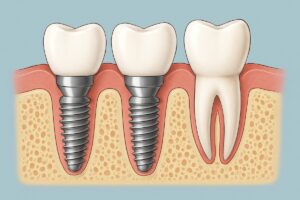
Cosmetic dental implants are titanium posts placed in the jaw to hold a lifelike tooth or set of teeth. They restore appearance and chewing function by replacing the root and the visible tooth. Because implants anchor restorations solidly, they look and feel more natural than many removable options.
Types of cosmetic implant restorations
- Single implant + crown — replaces one missing tooth with a crown matched to your teeth.
- Implant-supported bridge — replaces several teeth in a row using fewer implants.
- Implant-retained denture — a denture snaps onto implants for better stability than traditional dentures.
- Full-arch (All-on-4) restorations — a complete arch of teeth supported by four or more implants for a fixed result.
How cosmetic implants differ from basic tooth replacement
Cosmetic implant work focuses on esthetics as well as function. That means custom shading, shaping, and bite planning so the new teeth blend with your smile. Basic replacement may only restore chewing and gap closure; cosmetic restorations aim to match color, translucency, and contour of nearby teeth for a seamless look.
Who Is a Good Candidate for Cosmetic Dental Implants?
A cosmetic dentist reviews several factors before recommending implants. Key areas include oral health, gum condition, jawbone volume, and overall medical history. Good candidates have healthy gums and enough bone to hold an implant, or they are willing to consider preparatory treatments.
Cosmetic goals and expectations
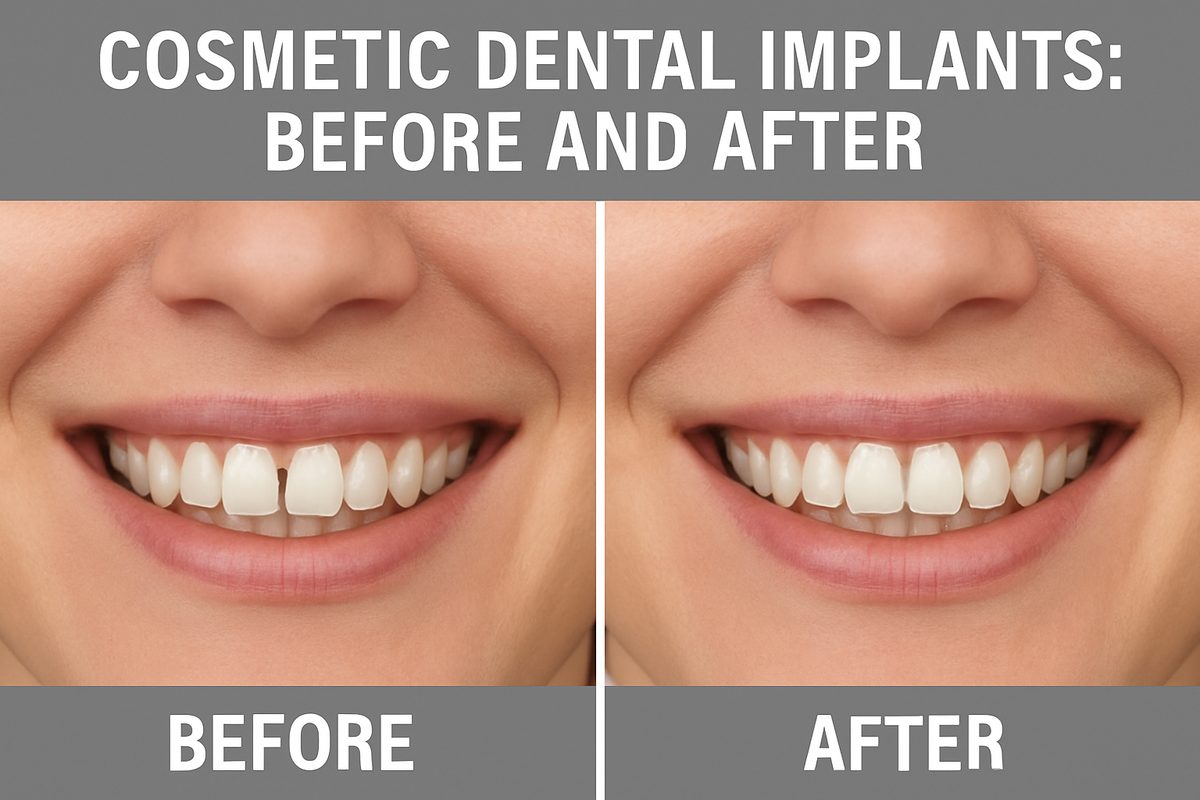
Some patients choose implants mainly for appearance — to stop visible gaps and restore a full smile. Others prioritize function, like improved chewing or speech. Often implants are combined with veneers, crowns, or orthodontics to get the best cosmetic result. Clear communication about goals helps shape the treatment plan.
Health and lifestyle considerations
Certain conditions affect candidacy. Smoking and uncontrolled diabetes raise risks for healing problems and implant failure. Significant bone loss may require bone grafting before implants are placed. Your dentist will discuss these issues and any needed prep work.
What to Expect: Procedure, Timeline, and Recovery for Dental Implants
Treatment usually follows predictable steps. First comes a consultation with imaging and a treatment plan. Next is implant placement into the jaw. The implant must heal and fuse with bone (osseointegration), which can take weeks to months. Finally, the cosmetic restoration (crown, bridge, or denture) is attached.
Sedation, comfort, and technology
Options range from nitrous oxide to oral sedation to keep patients comfortable. Digital planning and 3D imaging increase placement accuracy and improve cosmetic outcomes. Laser tools may be used for gentler soft-tissue shaping and faster healing.
Typical timeline and downtime
Complete treatment can take several months, depending on grafting and healing. Most patients return to normal activity within a few days of implant surgery, with mild swelling or soreness. Good home care, pain control, and follow-up visits help smooth recovery.
Benefits, Risks, and Alternatives
Cosmetic implants offer a natural look and long-term stability. They help preserve bone, restore chewing, and boost confidence. Risks include infection, implant failure, or an esthetic mismatch; experienced clinicians reduce these risks with planning and quality restorations.
Non-implant cosmetic alternatives
- Porcelain veneers — great for chips and discoloration but don’t replace missing roots.
- Crowns and bridges — can restore teeth without implants but may affect nearby teeth.
- Removable dentures — less expensive but usually less stable and less natural-feeling than implants.
Cost, Insurance, and Financing for Dental Implants
Cost depends on how many implants, whether bone grafts or extractions are needed, the type of restorative material, and lab work for cosmetic shading. Many dental insurance plans cover parts of the process but often not the full cosmetic portion. Practices commonly offer in-office financing, payment plans, or third-party lenders to help budget for care.
How to Choose a Cosmetic Dentist in Abilene, TX
Look for implant training, cosmetic affiliations, before-and-after photos, and patient reviews. Ask about the team’s experience with full-mouth rehab, digital planning, sedation choices, and lab partnerships for shade matching. Specific questions to ask a cosmetic dentist in Abilene, TX include:
- What is your experience with cases like mine and can you show examples?
- What steps are involved, and what is the expected timeline?
- Do you offer sedation and digital planning for cosmetic results?
- What warranties or maintenance plans do you provide?
- What financing and insurance options do you accept?
Leedy Dental brings decades of implant and cosmetic experience to patients in Abilene, TX. Their team emphasizes patient-first care, clear pricing, in-house implant placement, and modern technology to create predictable, natural-looking results.
If you’re curious whether cosmetic dental implants are right for you, schedule a consultation with a cosmetic dentist in Abilene, TX to review your goals, health factors, and a personalized plan.